
Bee bread is the food honey bees store for themselves: pollen packed into the comb, sealed with honey, and kept as the colony's protein supply. It is a traditional food in Eastern Europe, where it is called perga. Here are straight answers to the questions people ask most, with the studies behind them.
What is bee bread?
Forager bees bring pollen home as pellets on their hind legs. In the hive, younger bees press it into empty comb cells, moisten it with nectar or honey and glandular secretions, and often cap it with a thin layer of honey.2 Lactic acid bacteria, including Lactobacillus and Apilactobacillus kunkeei, live in this stored pollen.1,3 Compared with fresh pollen it holds several times more lactic acid (about 3.2% against 0.56%) and is acidic, around pH 4.3.1 Nurse bees eat it to make the royal jelly they feed to larvae.
Researchers have identified more than 300 compounds in bee bread from different countries, including proteins and free amino acids, sugars, fatty acids, vitamins, minerals and polyphenols.2 Its protein content ranges widely, roughly 14–37%, depending on which flowers the bees visited.1
Is bee bread the same as bee pollen?
Beekeepers collect bee pollen with a trap that brushes pellets off the bees' legs as they enter. Bee bread has to be taken from the comb itself, which is slower and is why it costs more.1 The two start from the same flowers, so their nutrients overlap; what changes is storage: honey, acidity and time in the comb.
How does bee bread compare with honey, royal jelly and propolis?
| Hive food | Made from | Its job in the hive |
|---|---|---|
| Honey | Nectar, concentrated and stored in the comb | The colony's energy (sugar) store |
| Bee pollen | Pollen pellets foragers carry on their legs | Fresh protein, before storage |
| Bee bread | Pollen packed into comb cells with honey and sealed | The colony's stored protein food, eaten by nurse bees |
| Royal jelly | Secreted by glands of young nurse bees | Fed to all young larvae, and to the queen for life |
| Propolis | Plant resins bees collect and work with wax | Seals and lines the hive |
Honey is the hive's fuel; bee bread is its protein. Manuka and other honeys are valued for their antibacterial properties, which is a different job; we compare the two in Manuka Honey vs. Beeghee.
Is bee bread actually fermented, or just stored pollen?
The lactic acid bacteria and the acidity are well documented.1,3 The open question is how much the microbes change the pollen's nutrition. A USDA Agricultural Research Service team measured stored pollen over time and found the microbes too few, roughly one microbe per million units of pollen-grain surface, to convert its nutrients; they concluded the comb works as a preservative environment.4 A follow-up found bees prefer pollen stored for less than three days.5 Reviews that describe bee bread as more digestible than pollen rely mostly on laboratory and animal studies.1,2
Our reading: bee bread is pollen preserved by acidity, honey and its own microbes, a living food rather than a dried ingredient. How the bees achieve that is still being studied, and we follow the research as it comes in. More in The Fermentation Process.
Is bee bread legit? What does the research say?
The 2022 reviews cited here summarize dozens of laboratory and animal studies on bee bread's antioxidant, antimicrobial and other properties, and both note how few human studies exist.1,2 Bee bread is best thought of as a nutrient-dense traditional food, eaten for its nutrition and taste.
Fresh, granules, powder or capsules: which form should I buy?
| Form | What it is | Worth knowing |
|---|---|---|
| Fresh, in honey (jar) | Bee bread kept moist in honey, as it sits in the comb | Closest to the stored food; contains honey's sugar; not for babies under 12 months |
| Dried granules | Hexagonal pieces separated from the comb and dried | Shelf-stable and low in added sugar; firm, chewy texture |
| Powder | Ground dried granules | Easy to mix into food; most processed of the food forms |
| Capsules | Powder in a capsule | No taste; small amount per capsule |
Whatever the form, look for the harvest date or season, the country of origin, and an ingredient list. Fresh bee bread is the one that keeps the moisture, acidity and microbes of the comb; dried forms trade those for shelf life.
How do I eat bee bread, and how much per day?
Fresh bee bread can go straight from the spoon, on toast or sourdough, or stirred into yoghurt or oats. Dried granules can be chewed slowly or soaked in water or honey to soften. Its taste is sour, floral and slightly bitter, and changes with the flowers of each harvest.
Is bee bread safe? Who should avoid it?
Bee pollen has caused anaphylaxis in people sensitized to plant pollens, sometimes people who did not know they were allergic; bee bread is made from the same pollen.6 Anyone new to bee products can start with a small amount. Honey can carry spores of Clostridium botulinum, so health authorities advise no honey, including foods made with it, before a child's first birthday.7
How much sugar is in bee bread?
Figures vary with the flowers and the region.1,2,8 A teaspoon is a small amount, but if you count carbohydrates or manage diabetes, ask your healthcare provider how it fits your plan.
What does bee bread cost?
Dried perga sold online in North America runs roughly CA$25–60 per 100 g. Fresh bee bread in honey is priced per jar and is not directly comparable by weight, because part of the jar is honey. A 255 g jar of Beeghee is US$39.99 and lasts about a month at a teaspoon a day.
Where can I buy fresh bee bread in the US or Canada?
- beeghee.co: ships to the United States, Canada and Mexico.
- Amazon US: search for Beeghee.
- Toronto area: Ambrosia Natural Foods stores. Locations are on our stockists page.
Does Beeghee contain ghee?
This article is for educational purposes and is not medical advice. Beeghee is a food, not a drug. Statements have not been evaluated by the FDA. Beeghee is not intended to diagnose, treat, cure, or prevent any disease. Beeghee contains honey and is not for infants under 12 months. If you are pregnant, nursing, taking medication, or have a medical condition, consult your healthcare provider before adding new foods to your routine.
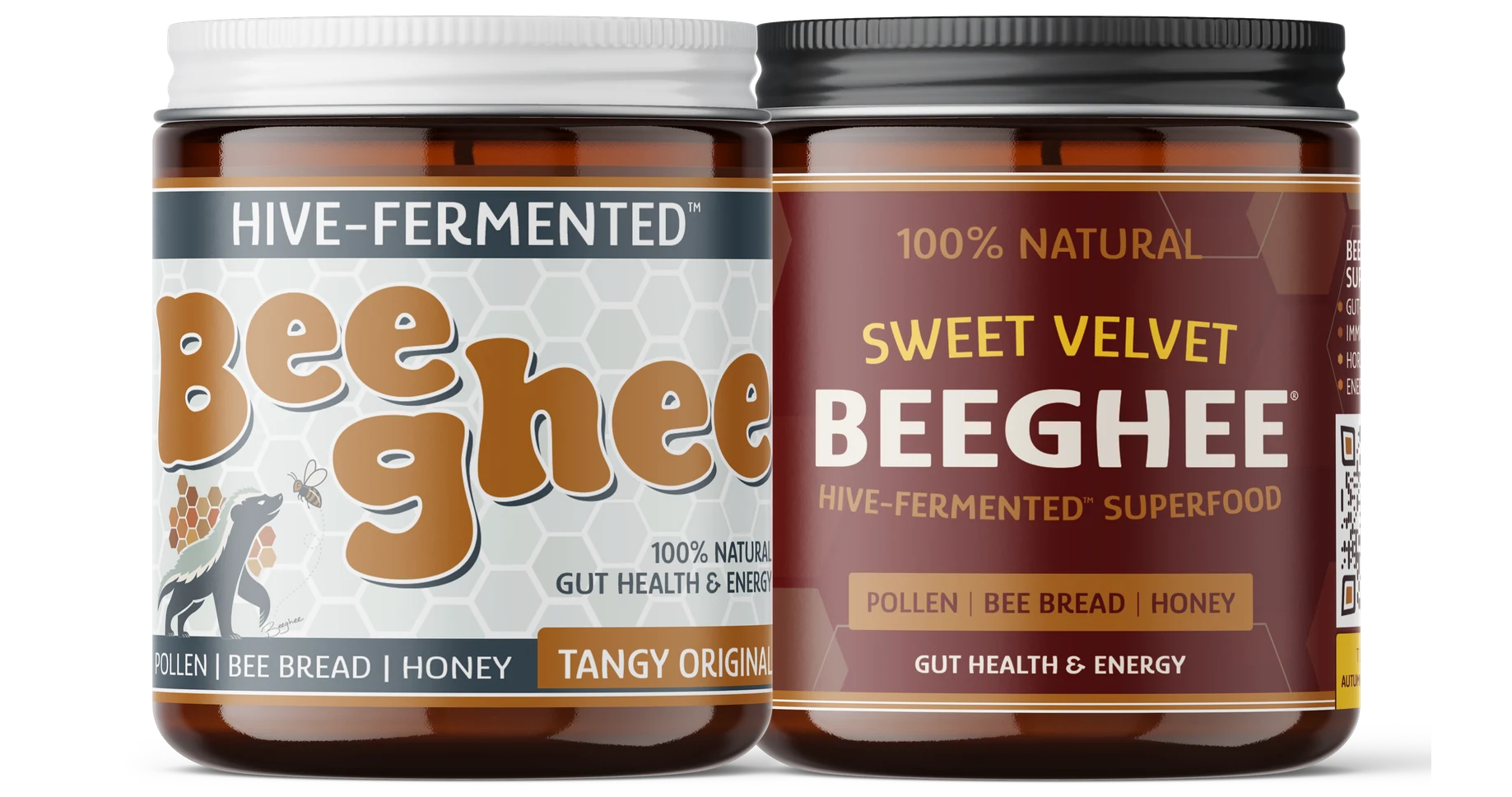
Experience the Science
Ready to transform your gut health? Try Beeghee's hive-fermented bee bread – nature's most bioavailable superfood.
Shop BeegheeReferences
- [1]Barta DG, Cornea-Cipcigan M, Margaoan R, Vodnar DC. "Biotechnological processes simulating the natural fermentation process of bee bread and therapeutic properties—An overview." Frontiers in Nutrition 9: 871896 (2022).
- [2]Bakour M, Laaroussi H, Ousaaid D, et al. "Bee bread as a promising source of bioactive molecules and functional properties: an up-to-date review." Antibiotics 11(2): 203 (2022).
- [3]Vásquez A, Olofsson TC. "The lactic acid bacteria involved in the production of bee pollen and bee bread." Journal of Apicultural Research 48(3): 189–195 (2009).
- [4]Anderson KE, Carroll MJ, Sheehan T, Mott BM, Maes P, Corby-Harris V. "Hive-stored pollen of honey bees: many lines of evidence are consistent with pollen preservation, not nutrient conversion." Molecular Ecology 23(23): 5904–5917 (2014). USDA Agricultural Research Service, Carl Hayden Bee Research Center.
- [5]Carroll MJ, et al. "Honey bees preferentially consume freshly-stored pollen." PLoS ONE 12(4): e0175933 (2017).
- [6]Choi JH, et al. "Bee pollen-induced anaphylaxis: a case report and literature review." Allergy, Asthma & Immunology Research 7(5): 513–517 (2015).
- [7]US Centers for Disease Control and Prevention, foods and drinks to avoid for infants (no honey before 12 months); Infant Botulism Treatment and Prevention Program, California Department of Public Health.
- [8]US Department of Agriculture, FoodData Central: honey (about 17 g of sugars per tablespoon).
Related Articles
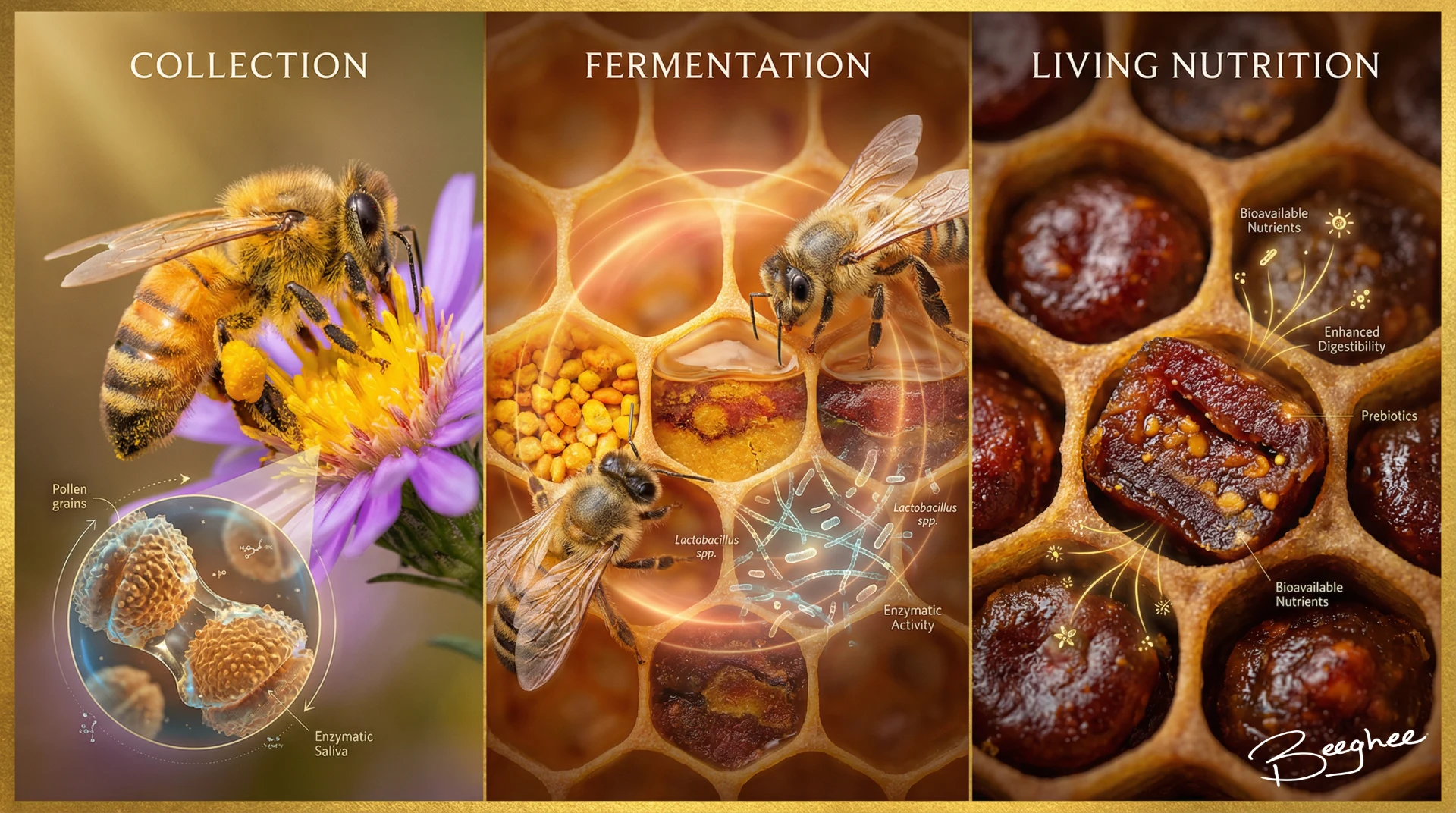
The Fermentation Process
An in-depth look at how bees transform raw pollen into living bee bread through The Fifth Ferment.
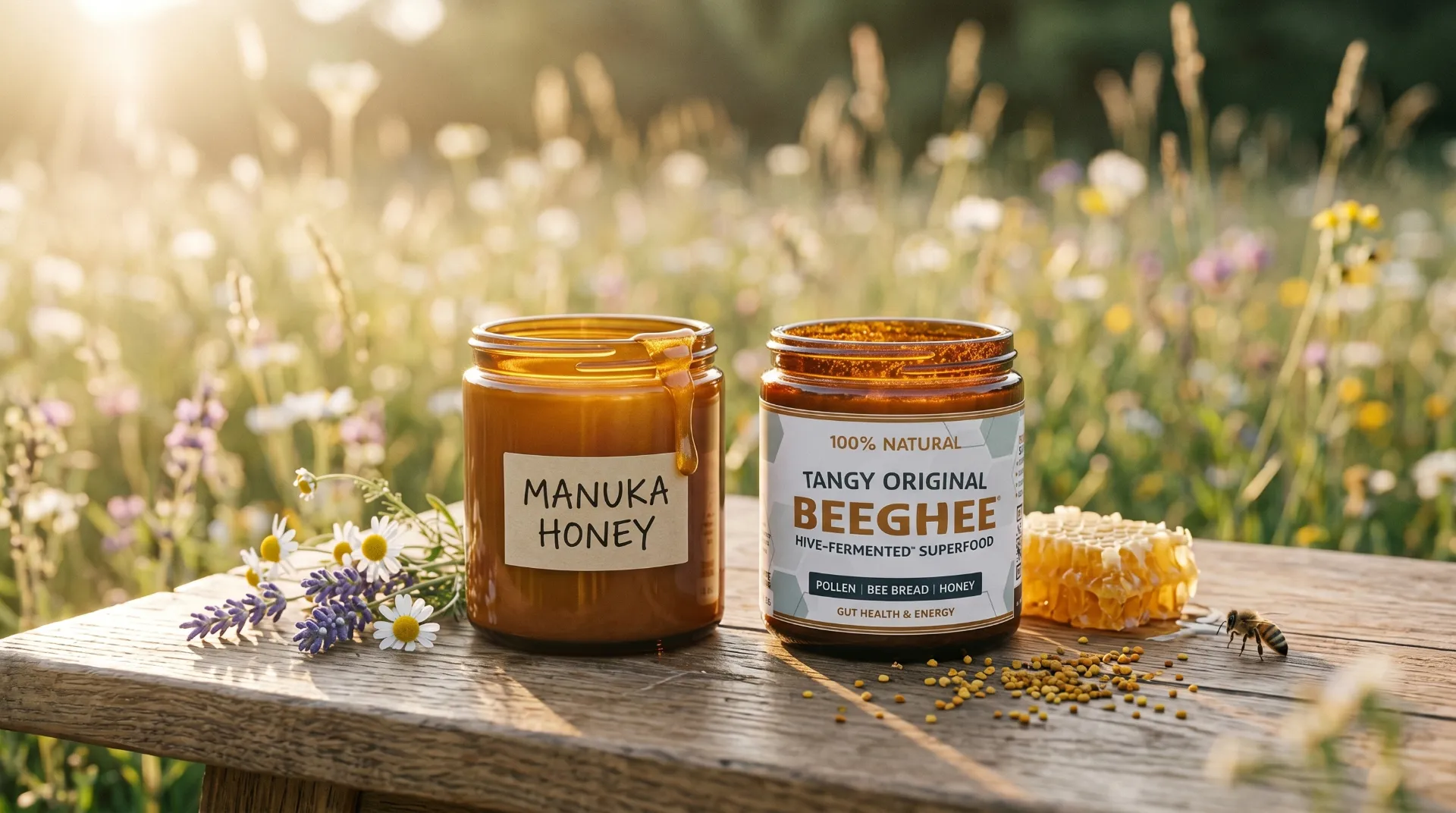
Manuka Honey vs. Beeghee: Two Gifts from the Hive, Two Very Different Jobs
Destroying bad microbes and supporting a healthy microbiome
“This Joy Will Not Last a Hundred Years”: Rudolf Steiner on Bees, a Century Later
Steiner's 1923 bee lectures checked against a century of bee science.