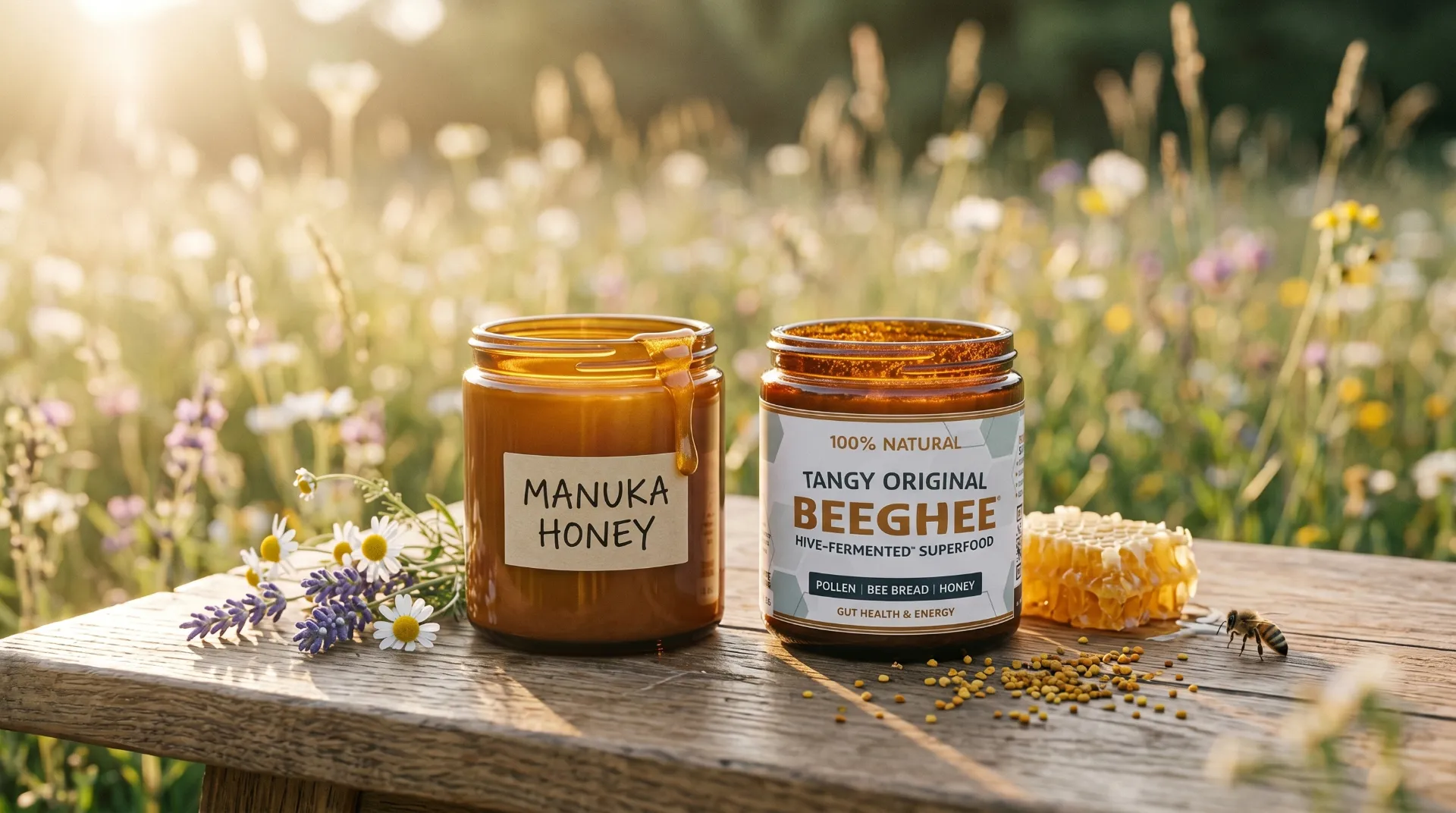
One is a shield, the other a seed - here's how to tell them apart, and why your pantry has room for both.
TL;DR
Manuka honey is famous for what it kills: bacteria. It's a dense, sterile, shelf-stable antimicrobial used on wounds, sore throats, and topical infections.
Beeghee is famous for what it grows: your gut microbiome. It's a living, hive-fermented bee bread packed with lactic acid bacteria, pre-digested pollen, and enzymes that are still active when you open the jar.
Same family of hive-born foods, with opposite mechanisms - but both are worth knowing.
Two Jars on the Counter
Imagine two amber jars side by side.
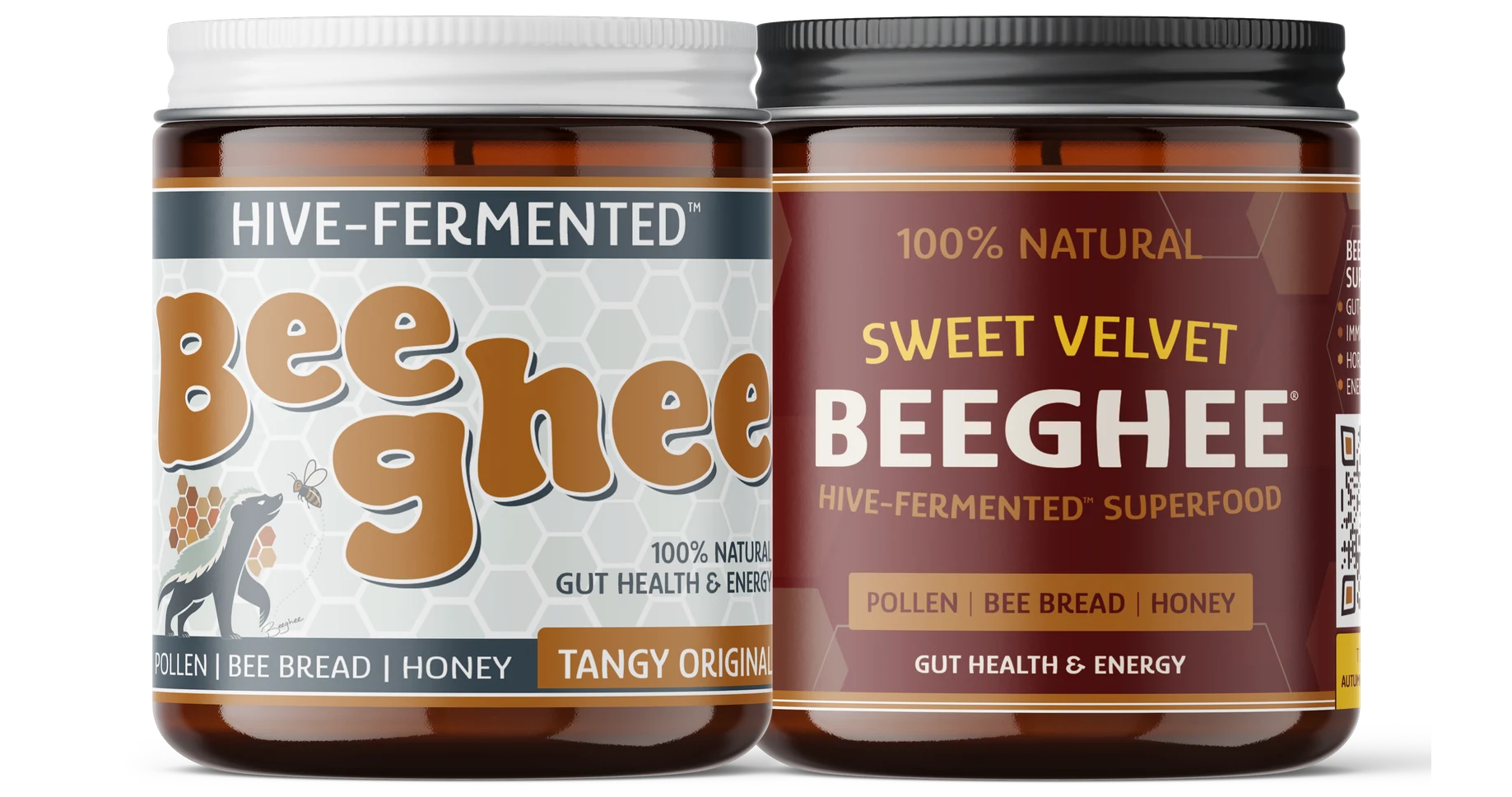
One is thick, dense, almost medicinal-looking — a Manuka honey from the New Zealand coast, with an MGO rating stamped proudly on the label. The other is creamy and textured, with tiny fermentation bubbles rising through the gold. That's Beeghee — hive-fermented™ bee bread from smallholder beekeepers in Mexico.
Both come from bees. Both have been used as medicine for thousands of years. Both carry health claims that get tossed around on wellness blogs.
But here's what almost nobody explains clearly: they do nearly opposite things inside your body. Understanding that difference is the whole point of this post.
What Manuka Honey Actually Does
Manuka honey comes from bees that forage on the Leptospermum scoparium — the manuka bush native to New Zealand and parts of Australia. When researchers in the early 2000s tried to figure out why this particular honey showed such unusually strong antibacterial effects, they landed on a compound called methylglyoxal (MGO).
MGO is what the "UMF" and "MGO" ratings on Manuka jars actually measure. Higher number, stronger antibacterial punch.
Here's what the science supports:
- Broad-spectrum antibacterial activity. Manuka has been shown in laboratory studies to inhibit Staphylococcus aureus (including some drug-resistant strains), Streptococcus, E. coli, and Helicobacter pylori.
- Wound healing. Medical-grade Manuka honey has been cleared by regulatory agencies (including the U.S. FDA) as a component of wound dressings since 2007. Hospitals use it on burns, ulcers, and post-surgical wounds.
- Sore throat and oral health support. The same antibacterial action that works on skin appears to help with throat irritation and bacterial overgrowth in the mouth.
- Shelf stability. High sugar, low water, low pH, and MGO together make Manuka hostile to nearly every microbe that lands in it. That's a feature — it's why honey can sit on a shelf for years.
In short: Manuka is a preservative-grade antimicrobial. Its superpower is stopping bacterial growth in its tracks. That's what it was selected for, that's what it's tested on, and that's what it does well.
What Beeghee Actually Does
Beeghee is not a honey. It's hive-fermented bee bread — a different hive product altogether, though it contains honey as one of its ingredients.
Here's how it's made (by the bees, not by us):
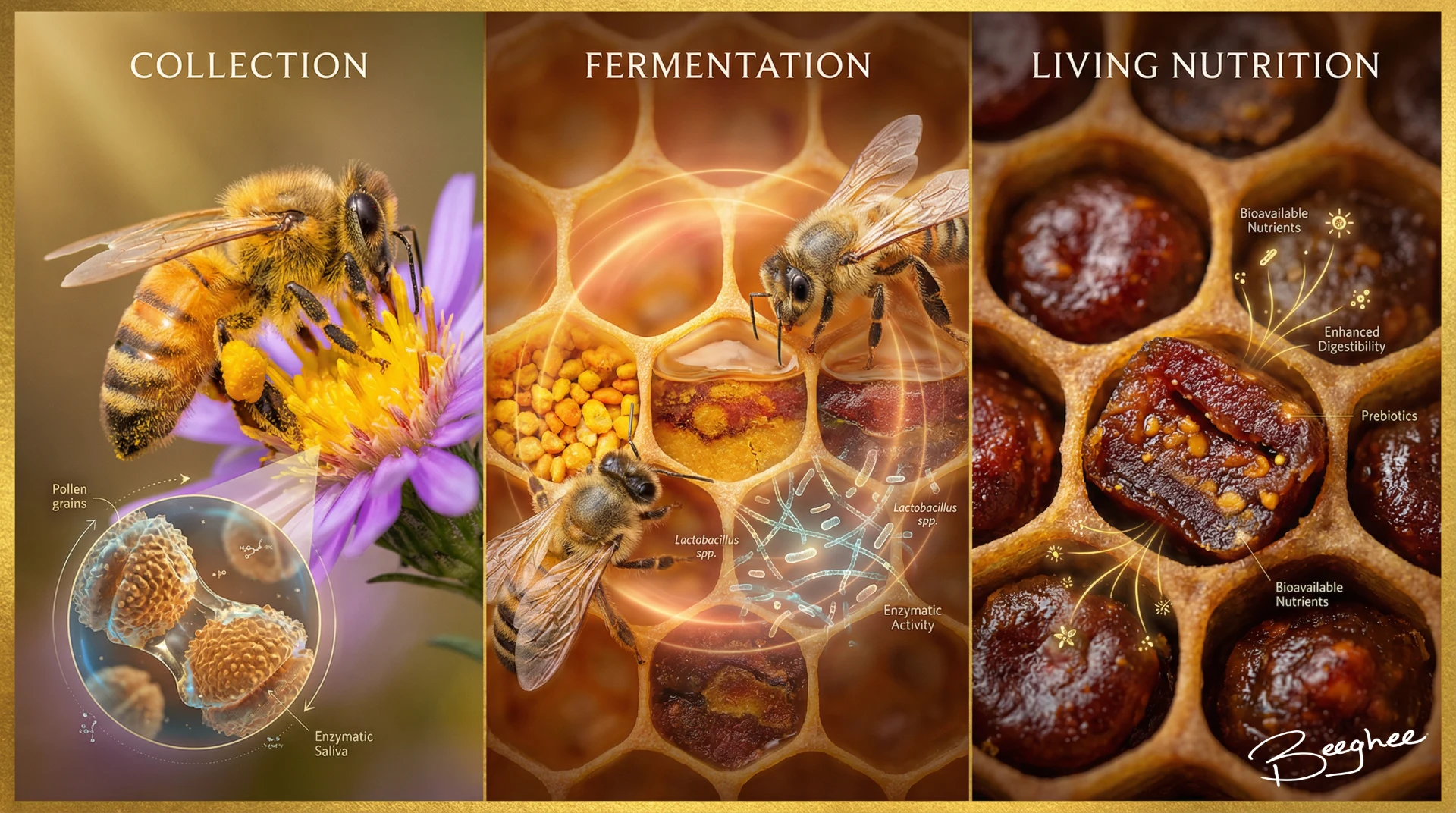
- A forager bee collects pollen and packs it into the hive.
- House bees mix that pollen with honey, propolis, and their own enzymatic saliva (containing amylase, invertase, and glucosidase).
- The mixture gets sealed into honeycomb cells.
- Beneficial microbes — primarily lactic acid bacteria like Apilactobacillus kunkeei and Fructobacillus fructosus — go to work. Over days and weeks, they ferment the pollen, break down its tough cellulose walls, produce new nutrients, and lower the pH.
The result is a living probiotic matrix that can carry up to 10⁸ CFU/g of beneficial bacteria, plus a complete amino acid profile, B-complex vitamins, and polyphenols made dramatically more bioavailable by the fermentation process.
What the research supports:
- Probiotic delivery. Bee bread naturally contains the same categories of lactic acid bacteria (Lactobacillus, Bifidobacterium-adjacent species) that are the backbone of most commercial probiotics — except these are alive in their native fermented matrix, not freeze-dried in a capsule.
- Gut microbiome support. Animal studies have shown bee bread supplementation reduces inflammatory markers (TNF-α, NF-κB, IL-1β) and supports gut barrier function.
- Bioavailable whole-food nutrition. Fermentation cracks open pollen walls that human digestion can't fully handle on its own, lifting digestibility from around 10–15% (raw pollen) to 66–80% (fermented bee bread).
- Sustained energy without stimulants. B3 and B5 at levels comparable to premium supplements, plus natural carbohydrates and 12–15g of complete protein per 100g.
In short: Beeghee is a living probiotic whole food. Its superpower is feeding the beneficial microbial ecosystem inside you.
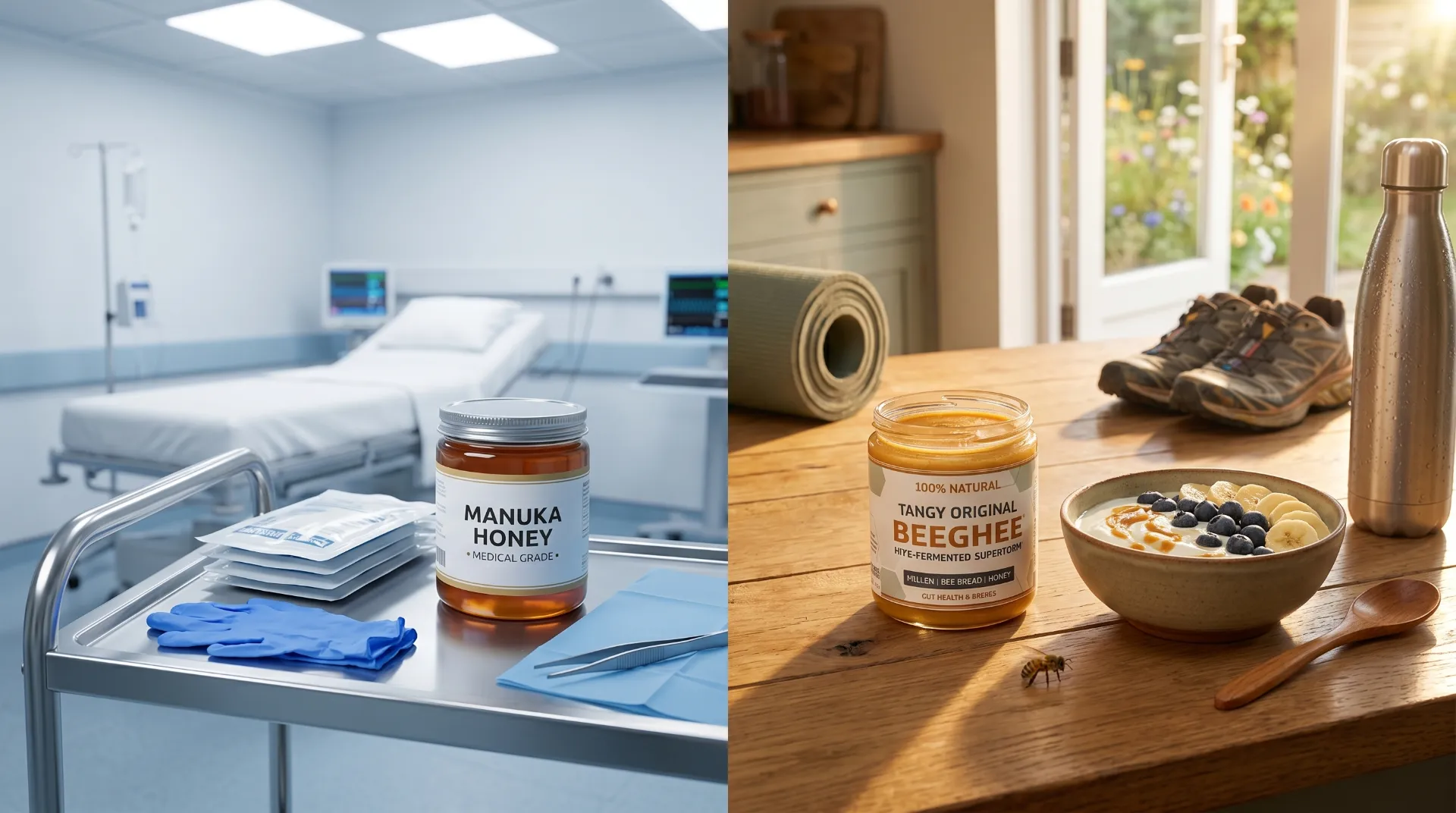
The Core Difference: Sterile Shield vs. Living Ecosystem
This is the part most articles get wrong.
Manuka honey and Beeghee aren't two flavors of the same thing. They're mechanically opposite.
| Manuka Honey | Beeghee (Hive-Fermented Bee Bread) | |
|---|---|---|
| What it is | Nectar processed by bees into honey | Pollen fermented by bees into bee bread |
| Primary mechanism | Antibacterial (kills microbes) | Probiotic (delivers beneficial microbes) |
| Key active compound | Methylglyoxal (MGO) | Live lactic acid bacteria, enzymes, polyphenols |
| State | Sterile, shelf-stable, inert | Living, still fermenting, active |
| Best-known use | Wounds, sore throats, topical infection | Gut microbiome support, whole-food nutrition, energy |
| Research maturity | Decades of clinical data, FDA-cleared wound dressings | Growing body of animal + in-vitro studies, early human data |
| Taste/texture | Thick, sweet, intensely floral | Creamy, tangy, slightly fermented |
| How you use it | Topically on skin, or eaten by the teaspoon for throat/gut | Eaten daily as a food, often on toast or by the spoon |
Put plainly: Manuka is designed to make environments inhospitable to microbes. Beeghee is designed to deliver the ones you want.
If you put live probiotic bacteria into Manuka honey, the MGO and sugar concentration would degrade them. That's Manuka doing its job. Likewise, if you tried to use Beeghee as a wound dressing, you'd be missing the point — you'd be applying a fermentation culture to an open wound, which is not what fermentation cultures are for.
Different tools. Different jobs.
When to Reach for Each
Reach for Manuka when you need to stop something
- A scratchy throat at the start of a cold
- A stubborn wound, cut, or skin irritation (medical-grade, topically)
- Occasional stomach discomfort linked to H. pylori (alongside medical care)
- A dense antimicrobial sweetener for tea when you're run down
Reach for Beeghee when you want to build something
- Daily gut microbiome support as part of a long-term routine
- A whole-food source of probiotics that doesn't live in a capsule
- Bioavailable pollen nutrition (protein, B-vitamins, amino acids)
- Sustained, non-stimulant energy through the afternoon
- Fermentation-derived polyphenols for general antioxidant support
Neither one is a drug. Neither one cures anything. Both are foods with real, studied bioactivity — used the way they were each designed to be used.
Why the Confusion Exists
A lot of the confusion in this category comes from a category-collapsing habit in wellness marketing: "bee products." Honey, royal jelly, bee pollen, propolis, bee bread, and hive-fermented bee bread all get lumped together as if they're variations on a theme.
They're not.
- Honey is processed nectar. It's a carbohydrate.
- Bee pollen is raw pollen pellets scraped off returning foragers. Nutritious, but mostly indigestible to humans because of the cellulose walls.
- Propolis is tree resin bees collect for hive defense. Antimicrobial, resinous, not eaten in bulk.
- Royal jelly is a glandular secretion fed to queen larvae. A different product entirely.
- Bee bread (also called perga, or ambrosia in ancient Greek texts) is pollen that has been fermented inside the hive. It's a whole other category.
- Beeghee is hive-fermented bee bread preserved in its living state — what happens when that ancient food reaches your jar still doing what it was doing in the hive. Learn more about The Fifth Ferment™.
Manuka honey is exceptional honey. Beeghee is exceptional bee bread. They live on the same shelf in the pantry. They don't do the same job.
The Bigger Picture: The Hive Is a Medicine Cabinet, Not a Product
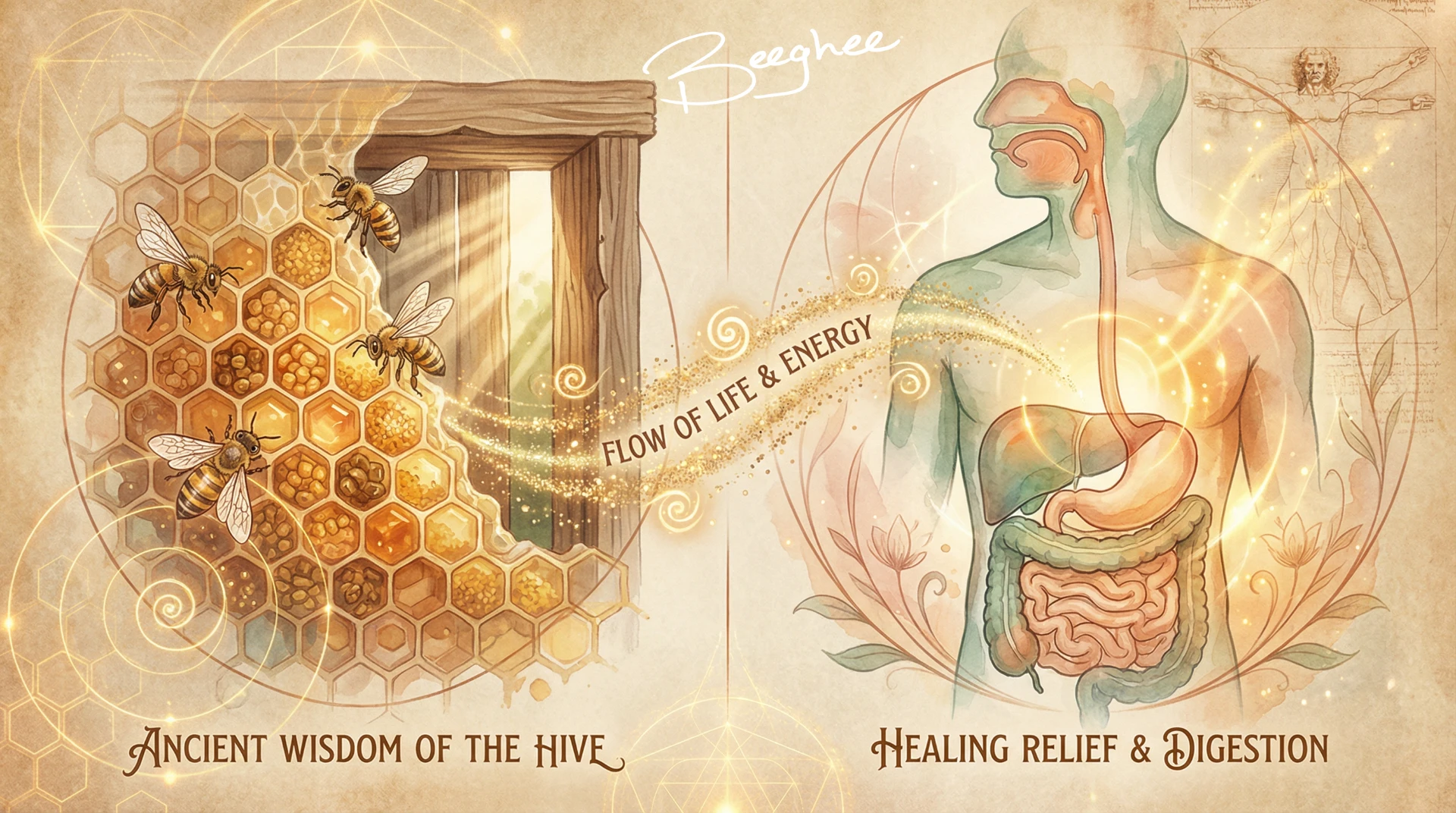
Humans have been going to beehives for remedies for roughly as long as we've been human. Ancient Egyptians used honey for wound healing. Greek physicians prescribed propolis for infections. Healers across Europe, Asia, and Africa treated bee bread as a strengthening food for the sick and elderly.
What modern research is slowly clarifying is why each of these hive products works — and that they work through genuinely different mechanisms. The hive isn't a single medicine. It's a small pharmacy, and the bees have been stocking it for about 100 million years.
Manuka honey is one kind of medicine from that pharmacy. Beeghee is another. Knowing the difference means you stop treating them as interchangeable superfoods and start using each for what it's actually good at.
The Bottom Line
If you only remember one sentence from this post, make it this:
Manuka honey kills bad microbes. Beeghee delivers good ones. Both come from bees. Both belong in the conversation. Neither replaces the other.
Your pantry has room for both. Your body has use for both. And the bees — quietly, patiently, doing this work long before we showed up — made both available to us.
They've been doing this a while. It's probably time we stopped treating everything with wings and a waggle-dance as the same thing.
This article is for educational purposes and is not medical advice. Beeghee is a food, not a drug. Statements have not been evaluated by the FDA. Beeghee is not intended to diagnose, treat, cure, or prevent any disease. If you are pregnant, nursing, taking medication, or have a medical condition, consult your healthcare provider before adding new foods to your routine.
Experience the Science
Ready to transform your gut health? Try Beeghee's hive-fermented bee bread – nature's most bioavailable superfood.
Shop BeegheeReferences
- [1]Henle T, et al. "Identification and quantification of methylglyoxal as the dominant antibacterial constituent of Manuka (Leptospermum scoparium) honeys from New Zealand." Molecular Nutrition & Food Research (2008). FDA clearance for medical-grade Manuka wound dressings dates to 2007.
- [2]Vásquez A, Olofsson TC. "The lactic acid bacteria involved in the production of bee pollen and bee bread." Journal of Apicultural Research (2009); Di Cagno R, et al. "Quorum sensing in sourdough Lactobacillus plantarum DC400: induction of plantaricin A (PlnA) under co-cultivation with other lactic acid bacteria and effect of PlnA on bacterial and Caco-2 cells." Proteomics (2010). Additional support from Eleazu et al. and Othman et al. on bee bread modulation of inflammatory markers in animal models.
Related Articles
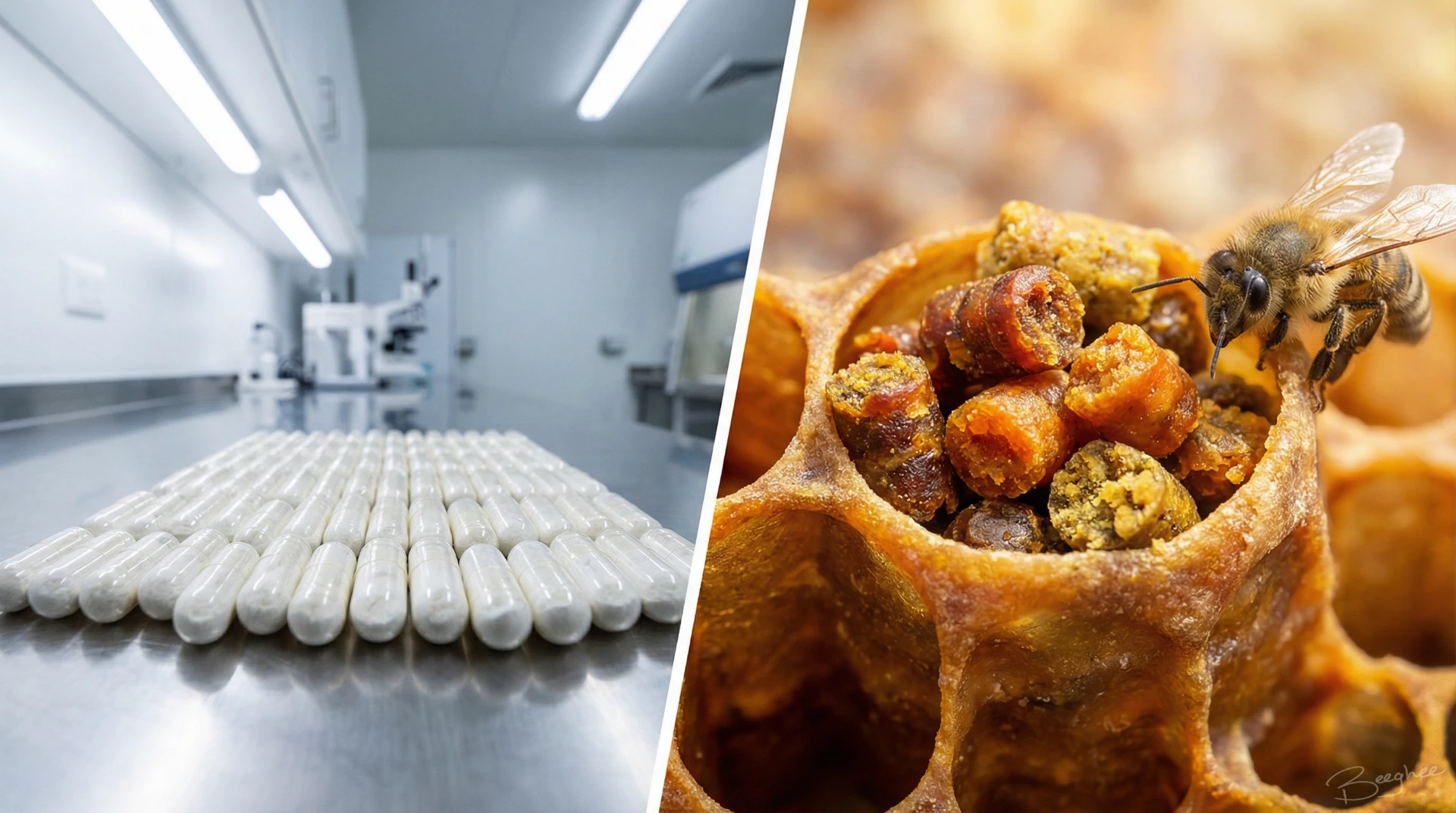
Why Bees Make Better Probiotics
Understanding why hive fermentation creates a more bioavailable probiotic food than manufactured supplements.
The Fermentation Process
An in-depth look at how bees transform raw pollen into living bee bread through The Fifth Ferment.
When Ancient Bees Knew What Your Stomach Needed
How a 100-million-year-old fermentation process might just be the missing piece in your digestive wellness puzzle.